
Taming the Night Sweats (The Sleep Hygiene Edit)

Updated: Aug 31
There is nothing quite like waking up at 3:00 AM drenched in sweat, followed immediately by a chill that makes you want to hide under three blankets. It’s a vicious cycle that leaves you "wired and tired" the next day.
Poor sleep doesn't just make you cranky; it magnifies every other menopause symptom, especially brain fog and weight gain.

Table of Contents
The "Why"
Falling estrogen levels confuse your body’s internal thermostat (the hypothalamus). It thinks you’re overheating when you aren’t, triggering a massive "cool down" response - flushing, sweating, and a racing heart.
Real Life Hacks
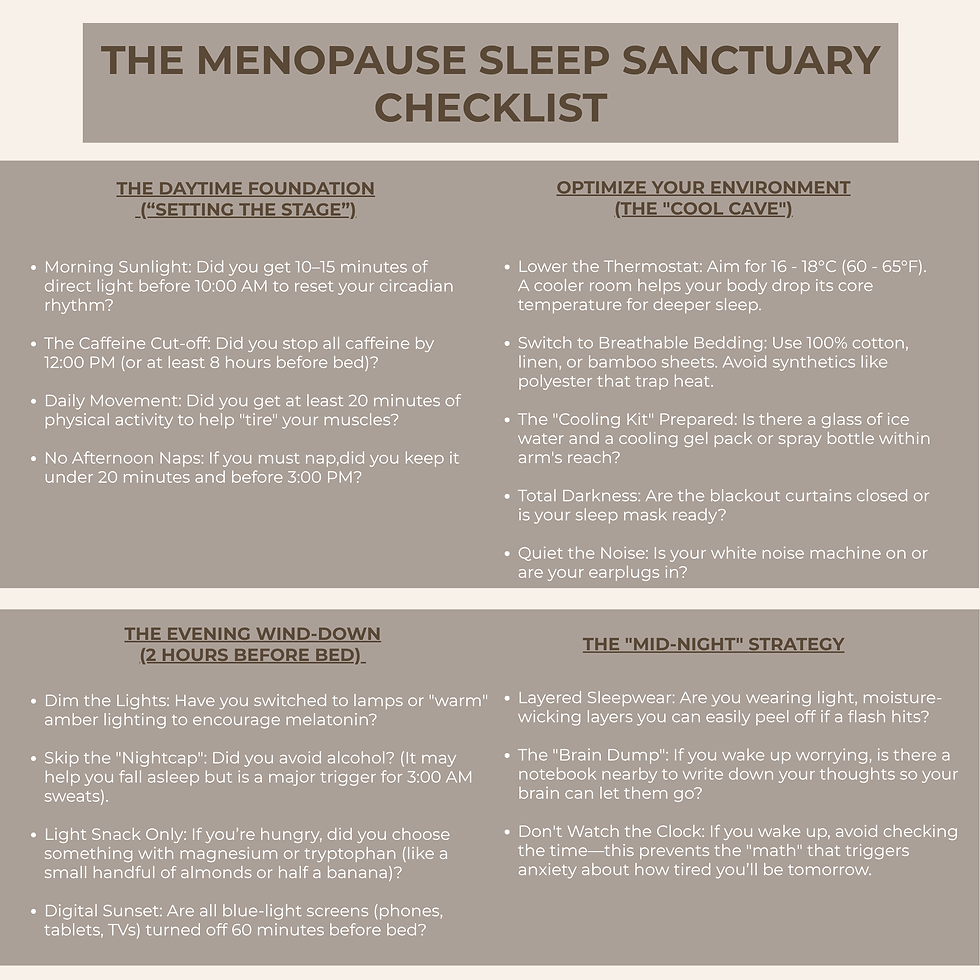
Layer Like an Onion: This applies to your clothes and your bedding. Use natural, breathable fibers like cotton, linen, or bamboo. If you wake up hot, you can peel back a layer without disturbing your whole setup.
The "Morning Sun" Trick: To sleep better at night, you have to start in the morning. Get 10 - 15 minutes of direct sunlight as soon as you wake up. This resets your circadian rhythm and tells your body when to start producing melatonin later in the evening.
Keep a "Cool Kit" Bedside: Keep a glass of ice water and a small spray bottle or a cooling gel pack next to your bed. Having a quick way to lower your temperature can help you drift back to sleep before your brain fully wakes up and starts "worrying" about the day.
Ditch the Nightcap: Alcohol might help you fall asleep, but it’s a major trigger for night sweats and often causes you to wake up as soon as it wears off.
Pro-Tip: The 15-Minute Rule
If you are still awake after what feels like 15 - 20 minutes, get out of bed. Go to another room, keep the lights low, and do something boring (like reading a dry book) until you feel sleepy.
This prevents your brain from associating your bed with the "struggle" to sleep.

Want a simple way to better understand your menopause symptoms? Download my FREE "7-Day Menopause Reset" Menopause Tracker to track your symptoms, sleep, energy, mood, and daily habits—all in one easy place.
The Bottom Line
Your bedroom should be a "cool, dark cave" dedicated only to sleep and intimacy. If you can’t get the full 8 hours in one go, don’t panic - even small improvements in your evening routine can improve the quality of the sleep you do get.
FAQs: Navigating Menopause Sleep Issues
1. Why do I suddenly wake up at 3:00 AM every single night?
This is often due to a "perfect storm" of hormones. As estrogen drops, your body becomes more sensitive to cortisol (the stress hormone). Around 3:00 AM, your body naturally has a small cortisol spike to prepare for the day; during menopause, this spike can be exaggerated, snapping you wide awake with a racing heart or a sudden hot flash.
2. Are night sweats the same as hot flashes?
Essentially, yes. A night sweat is just a hot flash that happens while you're sleeping. Because your body’s "thermostat" (the hypothalamus) is glitching due to low estrogen, it thinks you are overheating and triggers a massive cooling response (sweating) to bring your temperature down. This often leads to the "soaking wet then freezing cold" cycle.
3. Will taking Melatonin help me stay asleep?
While melatonin can help you fall asleep, it isn't always the best fix for staying asleep during menopause. Since the issue is often related to temperature regulation and cortisol, Magnesium Glycinate is frequently recommended by experts instead. It helps relax muscles and calm the nervous system without the "hangover" feeling some get from melatonin.
4. Can my diet really affect my night sweats?
Absolutely. Many women find that "triggers" like spicy foods, caffeine, and especially alcohol can significantly increase the frequency and intensity of night sweats. Even a glass of wine in the evening can cause your body temperature to rise and your blood sugar to dip later in the night, leading to an early wake-up call.
5. Should I see a doctor if I’m just "tired"?
If your lack of sleep is affecting your mental health, your ability to drive safely, or your performance at work, it’s time to talk to a professional. It’s also important to rule out Sleep Apnea or Restless Leg Syndrome, both of which become much more common in women during and after menopause.
About the Author

Sandra is a Certified Menopause Health Coach, Certified Barre® Instructor and Pilates Instructor, who helps women stay strong, active, and healthy through perimenopause and menopause.
Drawing on both professional knowledge and personal experience with menopause, she shares practical strategies for exercise, nutrition, and lifestyle habits to help women improve sleep, preserve muscle, and support mental clarity during hormonal transition.
She writes to provide clear and grounded menopause education rooted in strength - not extremes.


Comments