
Can Meditation or Prayer Help Menopause Anxiety, Mood Swings, and Sleep? (Natural Ways to Feel Calmer)

Updated: Aug 31
Struggling with anxiety, mood swings, or sleep problems during menopause? You’re not alone. Hormonal changes can disrupt your nervous system, making stress, irritability, and insomnia more intense. While meditation and prayer won’t replace hormones, they can help regulate your stress response, calm your mind, and improve sleep. Even 5 - 10 minutes a day can reduce symptom intensity and support a more balanced, manageable menopause - especially if you’re not using hormone replacement therapy (HRT).

Table of Contents
If you’ve found yourself feeling more anxious, emotionally up and down, or lying awake at night during menopause, you’re not imagining it.
Many women are surprised by how much menopause affects not just their bodies - but their mental and emotional state.
And if you’re not ready for, can’t take, or don’t want hormone therapy, you’re probably asking:
“What can I actually do to feel better?”
Meditation and prayer are often suggested - but do they really help?
The short answer: yes - but not in the way you might think.
They won’t “fix” your hormones, but they can help regulate your nervous system, reduce symptom intensity, and make menopause feel more manageable.
Let’s break it down.


Want a simple way to better understand your menopause symptoms? Download my FREE "7-Day Menopause Reset" Menopause Tracker to track your symptoms, sleep, energy, mood, and daily habits—all in one easy place.
Why Anxiety, Mood Changes, and Sleep Issues Happen During Menopause
Before we talk solutions, it’s important to understand what’s going on.
During perimenopause and menopause, estrogen(1) and progesterone(2) fluctuate and decline, and that directly affects your brain.
You may notice:
Racing thoughts
Feeling on edge for no clear reason
Heart palpitations
Sudden waves of panic
This happens because estrogen plays a role in regulating serotonin and cortisol -chemicals that affect mood and stress.
When estrogen drops:
Your stress response becomes more sensitive
Your body shifts more easily into “fight or flight” mode
2. Mood Swings and Irritability
You might feel:
Snappy or easily overwhelmed
Low motivation
Emotional highs and lows
Hormonal changes impact:
Brain chemistry
Emotional regulation
Stress tolerance
Things that never bothered you before suddenly feel harder.
3. Sleep Problems (Very Common)
This can look like:
Trouble falling asleep
Waking up in the middle of the night
Light, restless sleep
Contributors include:
Hormonal shifts
Night sweats
Increased cortisol (stress hormone)
An overactive mind
Where Meditation and Prayer Fit In
Let’s be clear:
Meditation and prayer are not hormone therapy.
But they do influence something just as important:
Your nervous system
When your body is stuck in a constant low-level stress state (which is very common in menopause), symptoms feel worse.
Meditation and prayer help shift your body from:
Fight or flight (stressed, wired, anxious)
to
Rest and digest (calm, grounded, regulated)
That shift alone can:
Reduce anxiety intensity
Improve emotional stability
Help you fall asleep more easily
How Meditation Helps Menopause Symptoms
Meditation doesn’t have to be complicated or spiritual.
At its core, it’s simply: Training your brain and body to slow down
What it does physiologically:
Lowers cortisol (stress hormone)
Activates the parasympathetic nervous system
Slows heart rate and breathing
Reduces mental overstimulation
What that means for you:
Fewer anxiety spikes
Less emotional reactivity
Easier time falling asleep
Even 5 - 10 minutes can make a difference when done consistently.
How Prayer Can Help
For many women, prayer offers something slightly different from meditation:
A sense of grounding and reassurance
A moment to pause and step out of mental noise
Emotional release and reflection
From a physiological standpoint, prayer can:
Slow breathing
Reduce stress response
Create a sense of safety
Which again supports: nervous system regulation
You don’t need to change your beliefs or routine - this is simply about using intentional quiet time to calm your body.
What This Means If You Don’t Want or Can’t Use HRT
If you’re not using hormone therapy, this becomes even more important.
Because while you may not be directly replacing hormones, you can:
Reduce how strongly symptoms show up
Improve how your body handles stress
Create more stability day-to-day
Think of meditation or prayer as: a support tool, not a cure
Best results happen when combined with:
Strength training and movement
Good sleep habits
Balanced nutrition
Stress management
Simple, Realistic Routines You Can Actually Stick To
Let’s keep this practical.
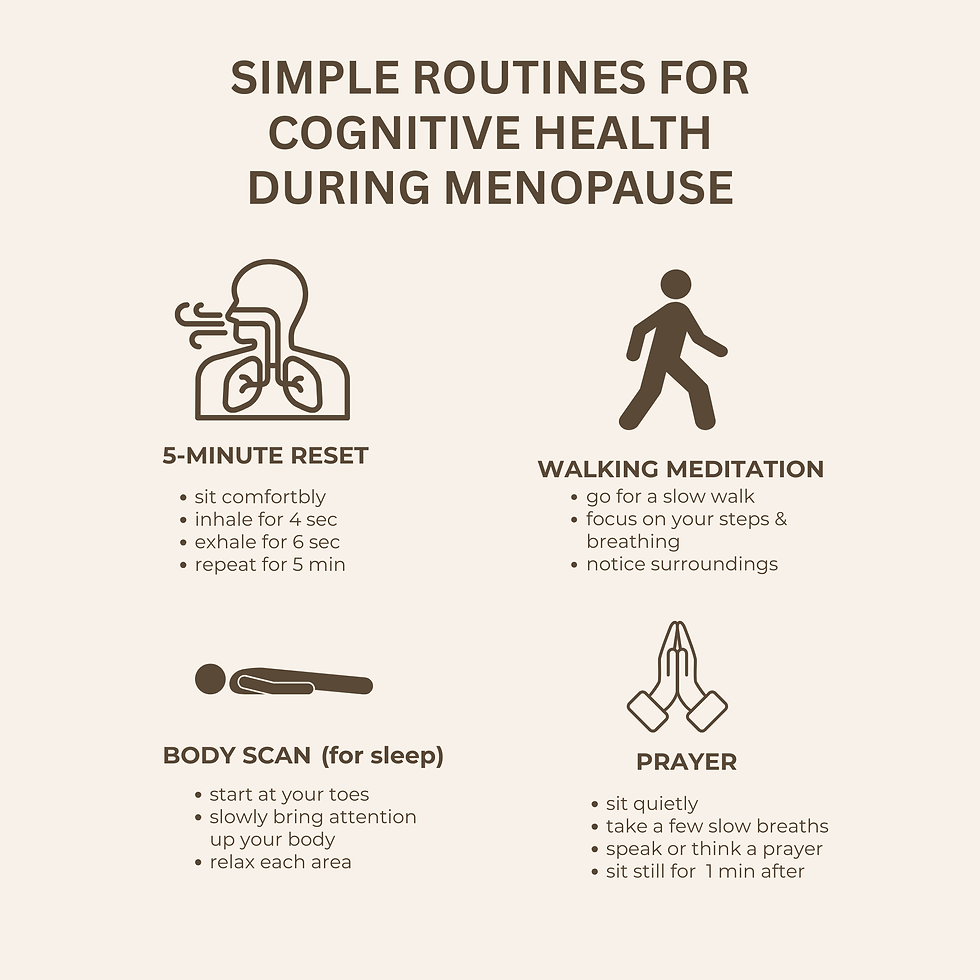
You do not need an hour. You need consistency.
1. The 5-Minute Reset (Best for Busy Days)
Sit comfortably
Inhale for 4 seconds
Exhale for 6 seconds
Repeat for 5 minutes
Focus: longer exhales → this calms your nervous system quickly
2. Body Scan for Sleep
Best done in bed:
Start at your toes
Slowly bring attention up your body
Relax each area as you go
If your mind wanders (it will), gently bring it back.
This helps shift your body out of “thinking mode” into rest mode.
3. Walking Meditation (Great if You Don’t Like Sitting Still)
Go for a slow walk
Focus on your steps and breathing
Notice your surroundings without judgment
This works especially well if traditional meditation feels frustrating.
4. Simple Prayer Routine (2 - 10 Minutes)
Sit quietly
Take a few slow breaths
Speak or think your prayer
Sit in stillness for a minute after
The key is not length - it’s creating a pause in your day.
What to Expect (Realistically)
This is where most people quit too early.
Meditation and prayer:
Won’t eliminate symptoms overnight
Won’t “fix” hormonal changes
But with consistency, you may notice:
You react less strongly to stress
Your mind feels quieter
Sleep comes a bit easier
You feel more in control
Small shifts add up.
From My Experience: What Actually Helped Me
I’ve used prayer for most of my life as a way to calm my thoughts during stressful moments. It was something familiar - something I could turn to when life felt overwhelming.
But meditation came much later.
I started experimenting with it in my mid-40s - not because of perimenopause symptoms, but simply out of curiosity. And honestly, at first, I didn’t enjoy it at all.
My mind was all over the place.
One minute I was thinking about what to make for dinner, the next about weekend plans, and then something completely unrelated. Sitting still for more than a few minutes felt frustrating, and I remember thinking, “This is not for me.”
What changed things for me was discovering guided meditation.
Instead of trying to “clear my mind,” I had something to focus on. I found myself drawn to guided meditations that walk you through calming, relaxing landscapes - like being at the beach or in nature.
That made a big difference.
It gave my mind somewhere to go, instead of expecting it to be completely quiet.
And suddenly, those 10 minutes didn’t feel like wasted time - they felt calming and actually helpful.
Now, I use both prayer and meditation depending on what I need.
Prayer helps me feel grounded and supported
Meditation helps quiet the mental noise
I often turn to one (or both) when:
Life feels overwhelming
My mind won’t slow down
I’m having trouble falling asleep
And that’s really where I’ve noticed the biggest impact - not in eliminating symptoms, but in helping me handle them better.
If you’re just starting, it’s worth knowing there isn’t just one way to meditate.
There are many types of guided meditations - not just nature-based - and you can find them easily on platforms like Spotify, YouTube, or Amazon Prime Video.
The key is to try few in order to find the one that feels comfortable and realistic for you.
Because the best approach is always the one you’ll actually stick with.
Final Thoughts
Menopause can feel overwhelming - especially when anxiety, mood changes, and sleep issues all hit at once.
Meditation and prayer are not magic solutions.
But they are simple, accessible tools that help your body do something it’s struggling with during menopause:
calm down
And when your nervous system is calmer, everything else becomes more manageable.
Whether you pick one or both, start small. Keep it simple. Stay consistent.
That’s what makes the difference.
Frequently Asked Questions
1. Can meditation really help menopause anxiety?
Yes. Meditation helps regulate the nervous system and lower cortisol, which can reduce how intense anxiety feels during menopause.
2. How long should I meditate to see results?
You don’t need long sessions. Even 5 - 10 minutes daily can make a noticeable difference if you stay consistent.
3. Is prayer as effective as meditation for stress?
Both can be effective. Prayer provides emotional grounding and calm, while meditation focuses more on breath and awareness. The best option is the one you’ll do regularly.
4. Can meditation improve menopause sleep problems?
Yes. Meditation helps calm the mind and reduce nighttime cortisol levels, making it easier to fall asleep and stay asleep.
5. Will meditation replace hormone replacement therapy (HRT)?
No. Meditation does not replace hormones, but it can reduce symptom intensity and improve how your body handles stress.
6. What is the best time to meditate during menopause?
Morning: helps reduce anxiety throughout the day
Evening: helps prepare your body for sleep
Choose what fits your routine.
7. What if I can’t sit still or “clear my mind”?
That’s completely normal. Try walking meditation or simple breathing exercises instead. You don’t need to clear your mind - just gently bring your focus back when it wanders.
References
About the Author

Sandra is a Certified Menopause Health Coach, Certified Barre® Instructor and Pilates Instructor, who helps women stay strong, active, and healthy through perimenopause and menopause.
Drawing on both professional knowledge and personal experience with menopause, she shares practical strategies for exercise, nutrition, and lifestyle habits to help women improve sleep, preserve muscle, and support mental clarity during hormonal transition.
She writes to provide clear and grounded menopause education rooted in strength - not extremes.


Comments