
Why Am I So Tired During Menopause? Causes, Solutions, and Energy - Boosting Tips

Updated: Aug 31
Does even the smallest task make you exhausted after menopause? Do you feel drained of energy after completing regular daily tasks you did not even notice before?
Feeling constantly tired during menopause is one of the most common - and frustrating - symptoms women experience after 40. Hormonal changes, especially declining estrogen and progesterone, can disrupt sleep, slow metabolism, increase stress, and lead to persistent fatigue. The good news?
Menopause fatigue is manageable with the right combination of nutrition, movement, sleep strategies, and lifestyle adjustments.

Table of Contents
My Experience With Menopause Fatigue
What Is Menopause Fatigue?
Menopause fatigue(1) isn’t just feeling a little tired at the end of the day - it’s a deeper, persistent exhaustion that doesn’t always improve with rest.
You might notice:
Waking up tired even after a full night’s sleep
Midday energy crashes
Brain fog and lack of focus
Low motivation for exercise or daily tasks
If this sounds familiar, you’re not imagining it - and you’re definitely not alone.

Want a simple way to better understand your menopause symptoms? Download my FREE "7-Day Menopause Reset" Menopause Tracker to track your symptoms, sleep, energy, mood, and daily habits—all in one easy place.
My Experience With Menopause Fatigue
I didn’t recognize menopause fatigue at first - not even close.
In my late 40s, I started having trouble sleeping. I would go to bed completely exhausted, expecting to fall asleep quickly… but instead, I’d lie awake for hours.
And when I finally did fall asleep, I’d wake up 30 - 45 minutes later - wide awake and unable to drift off again.
Night after night, this became my new normal.
At the time, I had no idea this could be related to perimenopause. I just assumed
it was stress, or something I needed to “push through.” Looking back, I realize how little I understood what my body was going through.
It took a few years - and a lot of frustration - before I finally started researching menopause and connecting the dots. That’s when it clicked: my sleep issues weren’t random. They were hormonal. And they were the root cause of the constant fatigue I was feeling every single day.
Once I understood what was happening, I made a decision: I was going to start treating sleep like it actually mattered.
Because it does. More than we think.
I began building a simple but consistent nighttime routine:
No screens at least 2 hours before bed
No eating within 3 hours of bedtime
Warm baths to help my body relax
A calming wind-down routine instead of pushing through the evening
I also noticed something important - on the days I exercised, I slept better. So I committed to regular daily movement, even if it was just a simple walk.
And slowly, things started to change.
I began falling asleep faster. Staying asleep longer. Waking up feeling rested - something I hadn’t felt in years.
It’s been a few years now, and I still stick to this routine. Not perfectly, but consistently. And it still works.
If you’re struggling with sleep and constant fatigue during menopause, I want you to know this: it’s not just in your head. And it’s not something you have to accept as your new normal.
Sometimes, the turning point is simply understanding what’s happening - and then choosing to support your body differently.
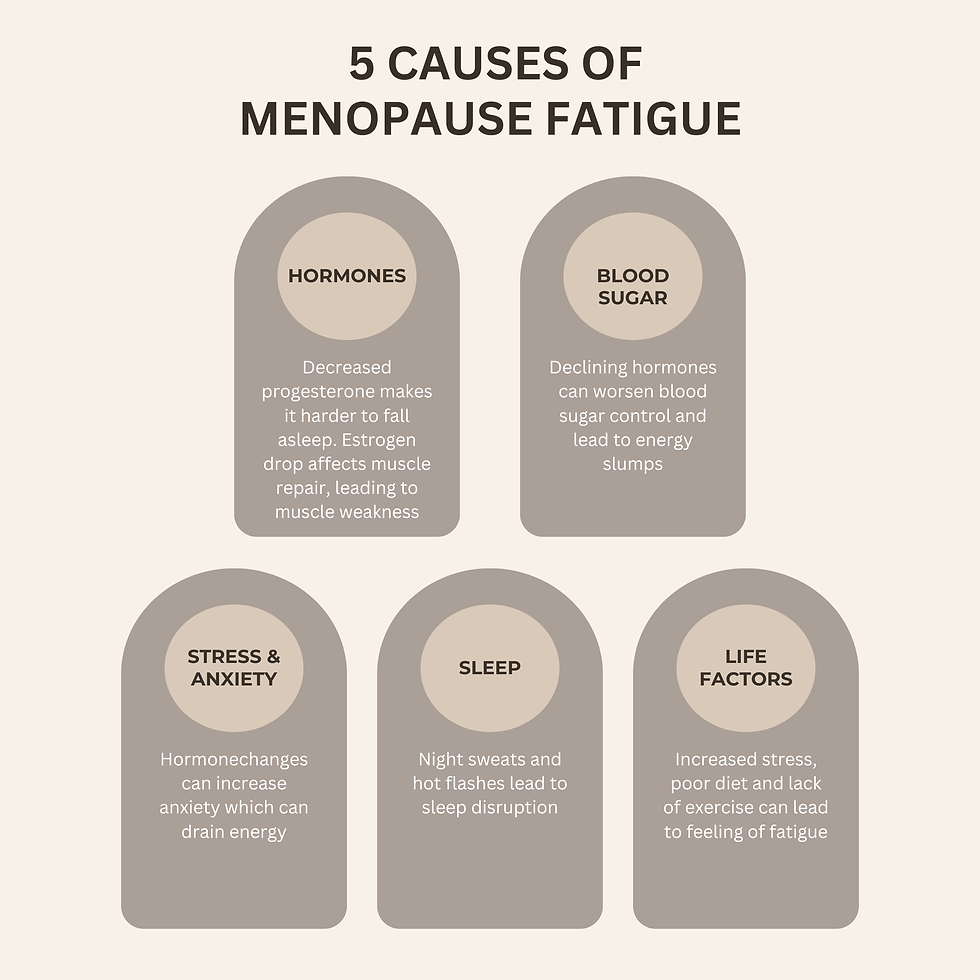
Why Am I So Tired During Menopause?
There isn’t just one cause. Menopause fatigue is the result of several overlapping changes happening in your body at once.
1. Hormonal Changes
Declining estrogen(3) and progesterone(4) directly affect your energy levels, sleep quality, and mood.
2. Poor Sleep
Night sweats, insomnia, and frequent waking are extremely common during menopause.
3. Increased Stress
Midlife often brings higher emotional and physical demands - and your body becomes more sensitive to stress.
4. Slower Metabolism
Your body becomes less efficient at producing energy from food.
5. Muscle Loss
Less muscle means lower overall energy and stamina.
Hormones and Energy: What’s Really Happening
Estrogen does more than regulate your cycle - it plays a key role in energy production, brain function, and mood.
As estrogen declines:
Your mitochondria (energy-producing cells) becomes less efficient
Serotonin and dopamine levels drop
You may feel more sluggish and unmotivated
Progesterone, which has calming effects, also decreases - making it harder to relax and sleep deeply.
This combination can leave you feeling wired but exhausted.
The Role of Sleep Disruption
If you feel constantly tired during menopause, your sleep is often the real culprit.
And not just how many hours you’re getting - but how well you’re actually sleeping.
Many women find that even when they’re in bed for a full 7 - 8 hours, they still wake up feeling drained. That’s because menopause tends to disrupt sleep in subtle (and not-so-subtle) ways that prevent your body from fully resting and recovering.
You might recognize some of these:
Waking up drenched from night sweats
Lying awake with insomnia, even when you feel exhausted
That frustrating 3 - 4 AM wake-up that won’t let you fall back asleep
Tossing and turning all night, never quite reaching deep, restful sleep
Over time, this kind of broken sleep really adds up.
When your body doesn’t get the deep rest it needs, it shows up everywhere in your day. You may feel:
Completely drained, even after a “full” night of sleep
Foggy, forgetful, or unable to focus (the dreaded menopause brain fog)
Craving quick energy fixes - especially sugar and carbs
It’s not a lack of discipline or motivation. It’s your body trying to cope with poor-quality sleep.
And until sleep improves, everything else—your energy, mood, metabolism—has a much harder time falling into place.
Stress, Cortisol, and Burnout
Due to the decline of estrogen and progesterone, cortisol (your stress hormone)(2) becomes more unstable during menopause.
This can lead to:
Feeling tired but unable to relax
Energy crashes in the afternoon
Increased anxiety
Poor sleep at night
Many women unknowingly push harder - exercising more, eating less - which actually increases cortisol and makes fatigue worse.
This is where burnout often begins.
Nutrition Mistakes That Worsen Fatigue
When your energy is low, food can either help you feel better—or quietly make things worse.
And during menopause, the way your body responds to food starts to change. So habits that used to work just fine may now leave you feeling even more tired.
Here are some of the most common patterns that can drain your energy without you even realizing it:
Common mistakes:
1. Not eating enough protein
Protein isn’t just for muscle - it plays a big role in keeping your energy steady throughout the day.
If your meals are mostly carbs (like toast, cereal, or snacks on the go), you may notice energy dips, cravings, and that “crash” feeling a few hours later.
2. Skipping meals or under-eating
It might seem like eating less should give you more energy - but the opposite is often true.
When your body doesn’t get enough fuel, it slows things down to conserve energy. That can leave you feeling sluggish, foggy, and more likely to reach for quick fixes like caffeine or sugar.
3. Too much sugar and refined carbs
Foods like pastries, white bread, or sugary snacks can give you a quick boost - but it doesn’t last.
They tend to spike your blood sugar, then send it crashing down, which can leave you feeling even more exhausted than before.
4. Low iron or B vitamins
Sometimes fatigue isn’t just about sleep or stress - it can come down to what your body is missing.
Low iron or B vitamins are especially common during this stage of life and can lead to that deep, persistent tiredness that doesn’t go away, no matter how much you rest.
How Muscle Loss Slows Your Energy
There’s a shift that happens after 40 that most women aren’t really warned about - and it has a big impact on how you feel day to day.
It’s called muscle loss (or sarcopenia), and it happens gradually over time.
You might not notice it right away, but you feel it.
Tasks that used to be easy - carrying groceries, going for a walk, getting through a busy day - can start to feel more tiring than they used to. Not because you’re doing anything wrong, but because your body is working with less muscle than before.
And muscle isn’t just about strength or appearance - it plays a key role in your energy.
When muscle mass decreases, it can lead to:
A slower metabolism, meaning your body produces and uses energy less efficiently
Less strength and endurance, so everyday activities feel more draining
Lower overall energy production, which can leave you feeling tired more often
This is why you might find yourself wondering, “Why does everything feel harder than it used to?”
It’s not just age - it’s a change in how your body is functioning.
The good news is that this is something you can absolutely support and improve with the right kind of movement and nutrition.
Medical Causes You Shouldn’t Ignore
While menopause is a major factor, fatigue can also be linked to underlying health issues.
Consider checking with your doctor if fatigue is severe or persistent.
Possible causes include:
Thyroid dysfunction
Iron deficiency (anemia)
Vitamin D deficiency
Sleep apnea
Depression
Don’t assume it’s “just menopause” - it’s worth investigating.

How to Boost Energy Naturally During Menopause
If there’s one change that can noticeably improve your energy, this is it.
Protein helps stabilize your blood sugar, supports muscle, and keeps your energy more consistent throughout the day. Without enough of it, those crashes and cravings tend to show up fast.
A good goal is around 20 - 30g per meal - but don’t overthink it. Just start by making sure protein is actually present on your plate.
Some easy options:
Eggs
Greek yogurt
Chicken or fish
Beans and lentils
Protein smoothies when you need something quick
Small shifts here can go a long way in how steady you feel day to day.
2. Strength Training (Not Just Cardio)
If your routine is mostly walking or cardio, you’re not alone - but you may be missing an important piece.
Strength training is what helps rebuild and maintain muscle, which directly impacts your energy, metabolism, and overall resilience.
And this doesn’t mean hours in the gym.
Even 2 - 3 sessions a week with light weights or bodyweight exercises, like Pilates, can make a real difference over time.
The goal isn’t intensity - it’s consistency.
3. Fix Your Sleep First
It’s tempting to push through fatigue with more coffee or willpower - but if your sleep is off, everything feels harder.
Instead of trying to “power through,” shift your focus to improving sleep quality.
That’s where real energy starts.
A few simple things that help sleep better during menopause:

Keep your bedroom cool (especially helpful for night sweats)
Limit caffeine after midday
Create a wind-down routine so your body knows it’s time to rest
Reduce screen time before bed, even if it’s just by 20 - 30 minutes
Better sleep doesn’t happen overnight - but small changes here can have a big ripple effect.
4. Balance Blood Sugar
When your blood sugar is all over the place, your energy will be too.
The goal isn’t to cut out carbs - it’s to make your meals more balanced so you avoid those spikes and crashes.
Start with:
Pairing carbs with protein and healthy fats
Avoiding sugary snacks on their own
Eating regularly instead of skipping meals
Think steady, not perfect.
5. Manage Stress Intentionally
Stress is part of life - but during menopause, your body becomes more sensitive to it.
And when stress stays high, energy drops.
You don’t need a complicated routine here. Just small, intentional moments that help your body reset:
A short daily walk (even 10 - 15 minutes counts)
A few minutes of deep breathing
Meditation or prayer to manage stress and anxiety during menopause
Taking real breaks during the day
Saying no to things that drain you unnecessarily
Simple doesn’t mean ineffective - these add up more than you think.

6. Stay Hydrated
This one is easy to overlook, but it matters.
Even mild dehydration can make you feel tired, foggy, and low on energy.
Aim for around 6 - 8 glasses of water a day - and more if you’re active or drinking caffeine. Sometimes what feels like fatigue is just your body asking for hydration.
7. Consider Supplements (If Needed)
Sometimes, your body needs a little extra support - and that’s okay.
It’s always best to check with your healthcare provider, but some commonly helpful options include:
Magnesium (especially for sleep and relaxation)
Vitamin D
B-complex vitamins
Iron (if levels are low)
Supplements aren’t a replacement for the basics - but they can help fill in the gaps when needed.
Always consult healthcare provider before starting supplement program.
None of this is about doing everything perfectly.
It’s about choosing a few areas to focus on, staying consistent, and giving your body what it actually needs right now.
That’s where real, lasting energy starts to come back.
When to Seek Help
If your fatigue:
Interferes with daily life
Doesn’t improve with lifestyle changes
Comes with dizziness, shortness of breath, or extreme weakness
…it’s time to consult a healthcare provider.
You deserve answers - not just to push through.
FAQs About Menopause Fatigue
Is it normal to feel exhausted during menopause?
Yes, fatigue is one of the most common symptoms due to hormonal changes, poor sleep, and stress.
How long does menopause fatigue last?
It varies. Some women experience it for a few years, while others notice improvement once hormones stabilize.
Can exercise make menopause fatigue worse?
Too much intense exercise can increase fatigue, but the right kind (especially strength training) improves energy.
What is the best diet for menopause fatigue?
A balanced diet rich in protein, healthy fats, fiber, and whole foods supports steady energy levels.
Does hormone replacement therapy (HRT) help with fatigue?
For some women, yes - especially if symptoms are severe. This should be discussed with a healthcare provider.
Always consult your healthcare provided before starting Hormone replacement therapy (HRT).
Final Thoughts
If you’ve been asking yourself, “Why am I so tired during menopause?” - the answer is layered, but it’s not hopeless.
This phase of life requires a shift:
Less restriction, more nourishment (no more dieting)
Less overtraining, more strength-building and low intensity cardio like walking or swimming
Less pushing, more supporting your body
When you work with your body instead of against it, your energy can come back - often stronger and more stable than before.
References
About the Author

Sandra is a Certified Menopause Health Coach, Certified Barre® Instructor and Pilates Instructor, who helps women stay strong, active, and healthy through perimenopause and menopause.
Drawing on both professional knowledge and personal experience with menopause, she shares practical strategies for exercise, nutrition, and lifestyle habits to help women improve sleep, preserve muscle, and support mental clarity during hormonal transition.
She writes to provide clear and grounded menopause education rooted in strength - not extremes.


Comments